

North & Baltic Sea · Inspection from the Transition Piece · Onshore & Offshore
Offshore inspection directly from the turbine
Offshore inspection directly from the Transition Piece of the turbine. Same report quality and reporting format as onshore, predictable costs, delivered via the DDI Portal.
from the TP
directly at the turbine
< 12 m/s
wind speed limit
1 operator
per campaign
DDI delivers the same inspection report offshore as onshore: standards-compliant to IEC 61400-24, with recommended actions, available in the DDI Portal. The DDI operator integrates into the regular maintenance crew and carries out the lightning protection measurement and visual inspection directly from the Transition Piece (TP). The inspection method is identical to onshore; access is coordinated through the operator's existing maintenance processes.
Launch and recovery directly at the Transition Piece
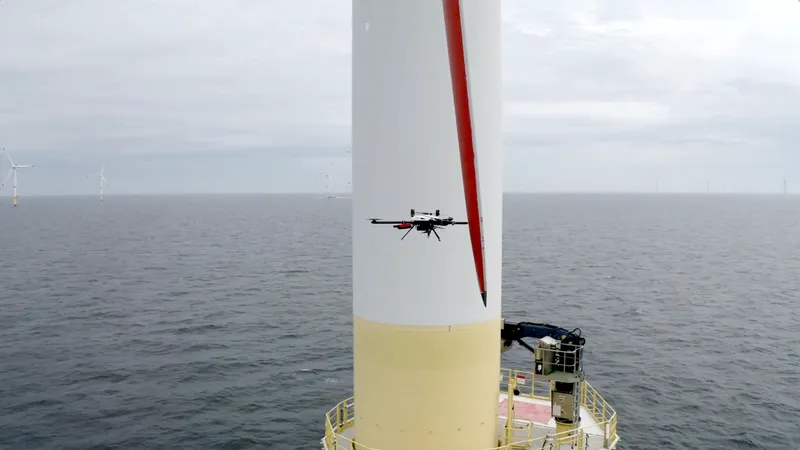
The DDI operator steps onto the Transition Piece (TP) of the turbine and launches the drone from there. All pilots are GWO-certified with all required offshore qualifications. The operator integrates into the regular maintenance crew.
Same report quality as onshore
Offshore or onshore: the lightning protection inspection report is produced by DDI, the visual inspection report by independent experts. Identical structure, identical quality, available in the DDI Portal. The fixed price per turbine remains predictable offshore as well.
How the flight window is planned
Flight operations are possible at wind speeds below 12 m/s, on a dry rotor blade. Weather and wave forecasts are checked daily against the flight window. Multi-day deployments are the norm.
Hardware operating limits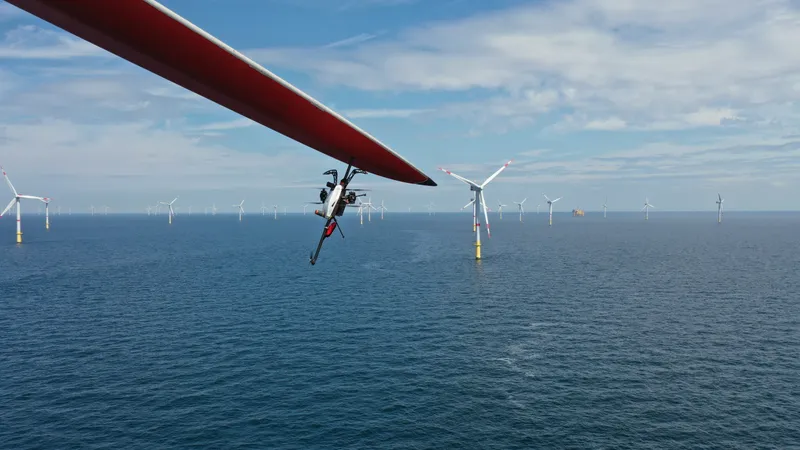
How we work
Enquiry and coordination
Coordination with the operator and O&M provider. Integration of the DDI drone operator into the regular maintenance crew. All pilots hold GWO certification and required offshore qualifications.
Flight window planning
Weather and wave forecasts are checked daily against the flight window. Flight operations are possible at wind speeds below 12 m/s. Multi-day deployments are the norm.
Execution from the Transition Piece (TP)
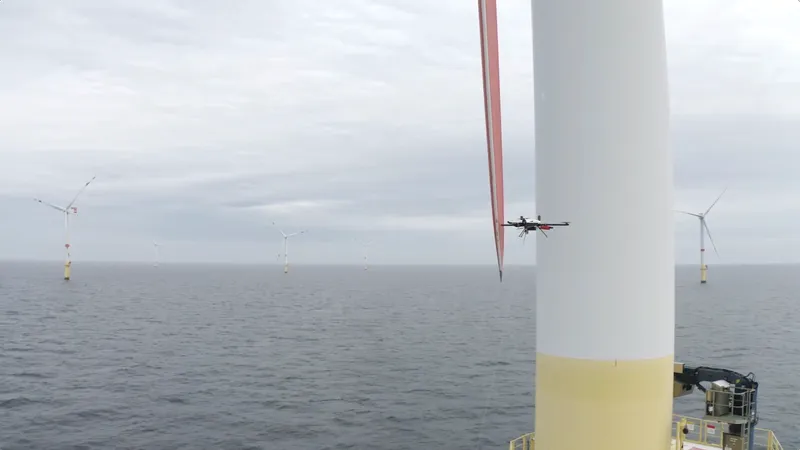
The operator steps onto the TP of the turbine, launches the drone from there and inspects the turbine directly. The drone operator controls the turbine independently. Per turbine: lightning protection inspection and visual inspection. Same procedure as onshore, adapted to maritime conditions.
Data delivery
Consolidation in the DDI Portal after the deployment. Lightning protection inspection report, visual inspection report with standardised defect classification and high-resolution original images follow the same format as onshore.
Frequently asked questions
How is access to the turbine organised?
The DDI drone operator steps onto the Transition Piece (TP) of the turbine and carries out the inspection from there. Drone launch and recovery take place directly on the TP. Access to the turbine is coordinated through the operator's existing maintenance processes.
What wind conditions are feasible?
Wind speeds up to 12 m/s at the deployment site, on a dry rotor blade. Rain, sleet and fog postpone the flight window.
What reports do I receive offshore?
The same as onshore: lightning protection inspection report to IEC 61400-24 (produced by DDI) and visual inspection report with standardised defect classification (produced by independent experts). All data in the DDI Portal.
Does the onshore fixed price apply offshore?
No. Offshore is quoted separately because access and flight conditions create different parameters. The fixed price per turbine remains predictable offshore as well.
Can DDI coordinate with our maintenance window?
Yes. The offshore campaign is coordinated with your O&M provider and maintenance crew. The DDI operator can be integrated into a regular maintenance trip.
Request an offshore campaign
We coordinate directly with your O&M provider and maintenance crew.
Prefer to talk directly?
Book 20-min call with Matthias